From La Guía SRQ: The Question Almost No One Asks
The following story with Tania Castroverde Moskalenko is translated to English from the October 2026 issue of La Guia SRQ, a free local Hispanic magazine and media publication serving the Hispanic and Latino community in the Sarasota and Manatee County area in Florida for over 25 years.
View the story in the October 2026 issue or learn more at laguiasrq.us.
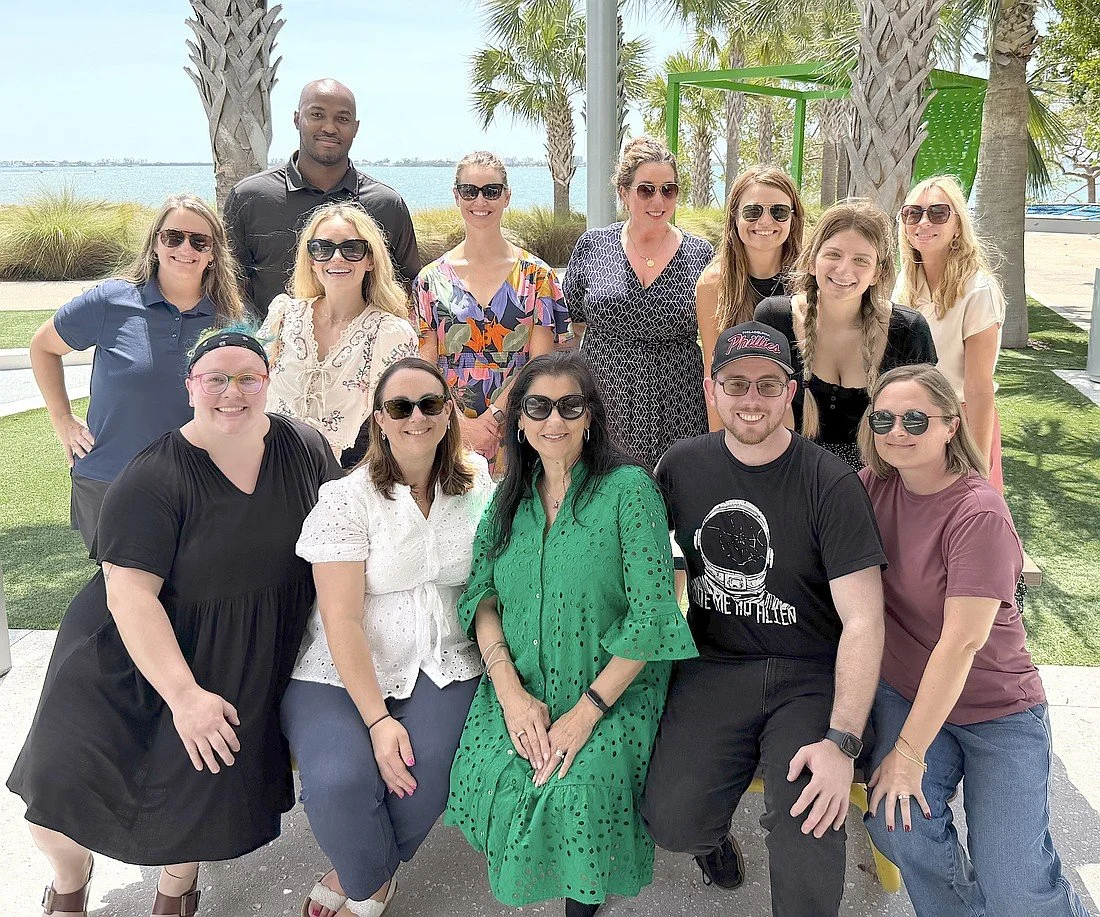
One afternoon a few days ago, at the Van Wezel, a group of students from our community sat across from six people who work in the arts. None of the six was the kind of person you picture when you think of a career in the arts.
Justin Gomlak, the Van Wezel’s director of education and community engagement. Kelli Maldonado, chief mission and impact officer at the Sarasota Performing Arts Foundation. Karla Romero, program coordinator. Griffyn Holcomb, assistant technical director. Francis Kelly, development officer. And Hannah Bagnall, a teaching artist who works for both organizations.
The students did more than listen from a distance. I watched them ask questions, talk with the panelists, and join the day’s activities, organized in partnership with Unidos Now. And I watched them discover something rarely discussed at home: that a theater has people who handle the technical work, raise funds, coordinate programs, teach, and open doors to the community.
That afternoon was a small-scale answer to a question the foundation has been asking itself for some time.
Who Is Not Coming
Every cultural institution knows who fills its seats. It knows who buys tickets, which ZIP code they come from, and how old they are. The foundation decided to turn the question around.
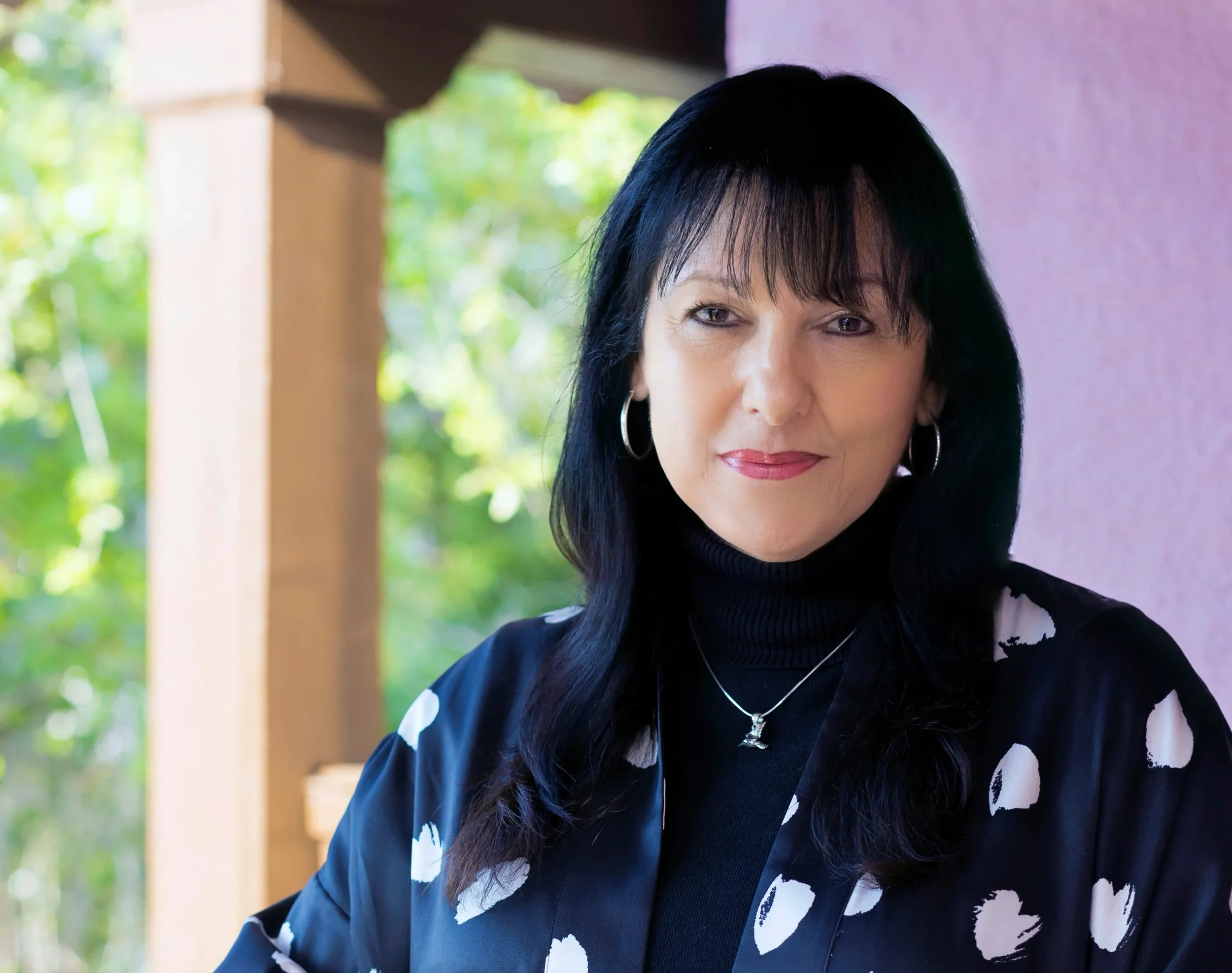
“We know who comes; we know the people who come,” Tania Castroverde Moskalenko, the organization’s CEO, tells us. “But the question is who isn’t coming. And why they aren’t coming.”
Much of the foundation’s work in the two counties today grew out of that research. And what it found was not unique to Sarasota: the barriers to participating in the arts are the same across the country. Cost. Transportation. Language. And whether the message is even reaching people.
That last point deserves a closer look, because it is not simply a matter of translation. What she questions is something more uncomfortable to examine: whether the organization’s marketing, publications, and communications truly reach families from diverse backgrounds, or simply circulate among those who already know about it. An invitation that never reaches beyond the usual circles is not an open invitation, however unlocked the door may be.
There is another barrier that does not appear in any study, which she describes with a word borrowed from everyday life: anxiety. The night before our conversation, she was reassuring a family member who was nervous about something they had to do the next day, and she heard herself explaining that everyone feels that way.
“Even I feel a little anxious when I have to go somewhere new,” she says. “I don’t know where I’m going to park; I don’t know how they’re going to welcome me.”
If you have ever decided not to enter a place because you did not know how you would fit in once you were inside, you already know what she is talking about. It is not a lack of interest. It is something else.
That is why she challenges a phrase often repeated in the cultural sector. Opening the doors is not enough. “You have to make sure people feel comfortable, that they truly know they are welcome.”
And there is one question she finds troubling when people take the answer for granted. “We often say: Everyone should come listen to the music, watch the dancing, and participate in the arts. But why? Why should they come?”
Why This Is Not Theoretical For Her
We ask her, and she answers with a story she makes clear from the outset she is not telling out of nostalgia.
She arrived from Cuba as a very young child. Her mother had studied piano there, but during their first years on this side of the water, there was no piano and no money for arts events. When her parents finally bought a home in Miami and the furniture arrived, a piano came with it.
What she remembers about that night is not so much the instrument. It is realizing that she no longer remembered her mother playing. She had been too young, and two years had passed.
“That night transformed me,” she says. “That was where my love for the arts truly began.”
Two years later, she fell in love with classical ballet and pestered her parents until they paid for lessons, even though those lessons were not in the budget. She studied theater and dance, performed as a dancer, and in 2005 crossed to the other side of the stage, into arts administration. She led institutions in Tennessee, Chicago, Indiana, and Miami. In early 2024, she arrived in Sarasota.
But the point she wants to make with the story is practical rather than sentimental: she had a pianist for a mother and a family that gave in. Those two things are not part of most families’ budgets or life stories. If access depends on having them, then access does not exist.
“I’m telling you the story so you’ll know that this is very personal for me.”
What The Foundation Is And What It Is Not
Something needs to be clarified here, and if you were confused about it, that is not your fault. Many people in this region believe the foundation and the Van Wezel are the same thing. They are not, and there are forty years’ worth of reasons for the confusion.
The organization was established nearly four decades ago as the Van Wezel Foundation, and throughout those years it had a single function: raising funds for the programs at the lavender-colored municipal venue. “The Van Wezel ran all the programs,” she explains, “and we were a foundation; we raised funds to support them.”
That changed when the decision was made to build the new center. The foundation began developing its own programming, and today they are two separate entities, each with its own team, marketing, and schedule of events. The foundation does not decide what appears on the main hall’s stage.
She calls it, plainly, an identity conflict. And it has a practical consequence that matters more than it might seem: the foundation’s free educational and community programming, happening right now in both counties, lives in the shadow of a marquee that does not belong to it.
“Most of our programs are free,” she says. Of everything offered, she estimates that only one program has a fee, and it is minimal.
Precisely because tickets are not sold, those programs do not have the visibility of a show in the main hall. She herself acknowledges that the foundation needs to communicate more effectively, and she uses a single word to describe the environment in which it must make itself heard.
“There’s so much noise.”
What Is Available Today And Where
The practical response has been to take the programming outside the building. Programs are held in public libraries, community centers, and neighborhoods throughout Sarasota and Manatee, in partnership with local organizations. Among them are two organizations we know well at this magazine: CreArte Latino and Unidos Now.
For early childhood, the foundation operates Gulf Coast Florida Wolf Trap, an affiliate of the Wolf Trap Institute for Early Learning Through the Arts. This does not mean bringing a performance into a classroom. Its teaching artists are trained in arts integration and work alongside preschool teachers, using music, movement, and theater to teach early literacy, basic math concepts, and emotional regulation. Several of those teaching artists are Latino, and the foundation accepts applications from local artists who would like to join them.
The other format is the Artist in Residence Program. Last year, the foundation brought in Paige Hernández, a Cuban American multidisciplinary artist who spent an entire week working with children in schools and giving free performances at various locations throughout the community, including The Bay Park.
That model, an extended residency rather than a single performance, is deliberate. “It isn’t because every child is going to become an artist,” she explains, “but because there is pride in seeing your culture reflected onstage.”
It is a type of programming she previously managed in other cities. In Chicago, she presented Amalia Hernández’s Ballet Folklórico de México and groups from Colombia and throughout Latin America. In Sarasota, she says, this has barely been seen so far, even though the Hispanic population in both counties has continued to grow.
Representation Within The Organization And Onstage
The most challenging part of the conversation was not about the audience, but about who makes the decisions.
Early in her career, Castroverde Moskalenko scheduled a classical music concert without realizing that it fell on Yom Kippur. A large portion of her audience was Jewish. She is not, and the date was not on her radar.
“There was no one around me to say, ‘Tania, we need to think about this,’” she recalls.
The lesson she draws is not about calendars. “It is nearly impossible for one person in an organization to know everything,” she says. That is why she insists on surrounding herself with people from different backgrounds, not only among the artists, but also on the team that runs the organization, among those who decide the programming, and among those who maintain the donor base.
In other words, representation cannot stop at the stage. And she speaks about her own organization with a candor no one demanded of her. Today, there are no Latino members on the foundation’s board of directors, and she identifies that as one of the things that must change.
She herself is one of the few Latinas in the country leading a performing arts organization of this scale, at an institution that is not specifically devoted to Hispanic culture. She says this without celebrating it, as though describing an unfilled position.
Her conclusion fits into a single sentence. “A performing arts center has to reflect the population of the place where it is located.”
What Comes Next
The foundation is completing a strategic plan with guidance from Michael Kaiser, who led the Kennedy Center for more than a decade and now lives in Sarasota. The goal is to bring the foundation’s programming together with the Van Wezel’s programming in preparation for the new building. In the terms of this conversation, it is the solution to the identity conflict: a single home, with its own judgment about what goes onstage.
It is worth remembering that row of chairs from the beginning. People from the Van Wezel and people from the foundation sat there together, speaking to the same group of young people. The integration now being put down on paper is already being rehearsed in practice, and it began with the students.
The new performing arts center is a public-private partnership with the City of Sarasota, which means it moves according to two calendars, neither of which belongs entirely to the foundation, and its effect on the local economy will be considerable. She explains this less through projections than through a pattern she has seen repeated.
“Everywhere a cultural center has opened, businesses begin to spring up, people begin moving into those areas, artists move there, and the area begins to be revitalized.”
In Sarasota, this has already begun to happen around the Rosemary District and The Bay Park. For Hispanic businesses, this can be felt in something very tangible: people circulating before and after every performance along a corridor that, until recently, emptied out at night.
She offers no opening date. These projects move slowly and depend on public decisions that the foundation does not control. What she offers instead is a way to measure time.
“You are only the steward of the moment.” What is being built now, she says, is a legacy, and legacies are not measured by the years of the person who begins them.
She then quotes an English saying about planting trees whose shade you will never get to enjoy. And she makes it clear that, in the meantime, there is no need to wait for anything. The programs continue, the Van Wezel continues operating, and that period of time has a purpose.
“It allows us to build that trust between ourselves and the Hispanic community.”
How To Get Involved
The foundation’s educational and community programming is announced at performingartsfoundation.org and on its social media accounts: Facebook, Instagram, and LinkedIn. Its offices are located at 201 Cocoanut Ave., Sarasota. The email address for questions about programs, including Wolf Trap, is programs@performingartsfoundation.org.
Local Spanish-speaking artists interested in joining the teaching artist roster can contact Kelli Maldonado, chief mission and impact officer.
For families, the message the foundation wants to convey is simpler, and it is directed at you. You do not need to be an artist. You do not need to be an expert. You do not need to dress a certain way. And language is not a requirement either.
“The rules don’t really exist.”
And if you do not have the mental energy to go anywhere this week, that is okay too. The programming will still be there next month.